

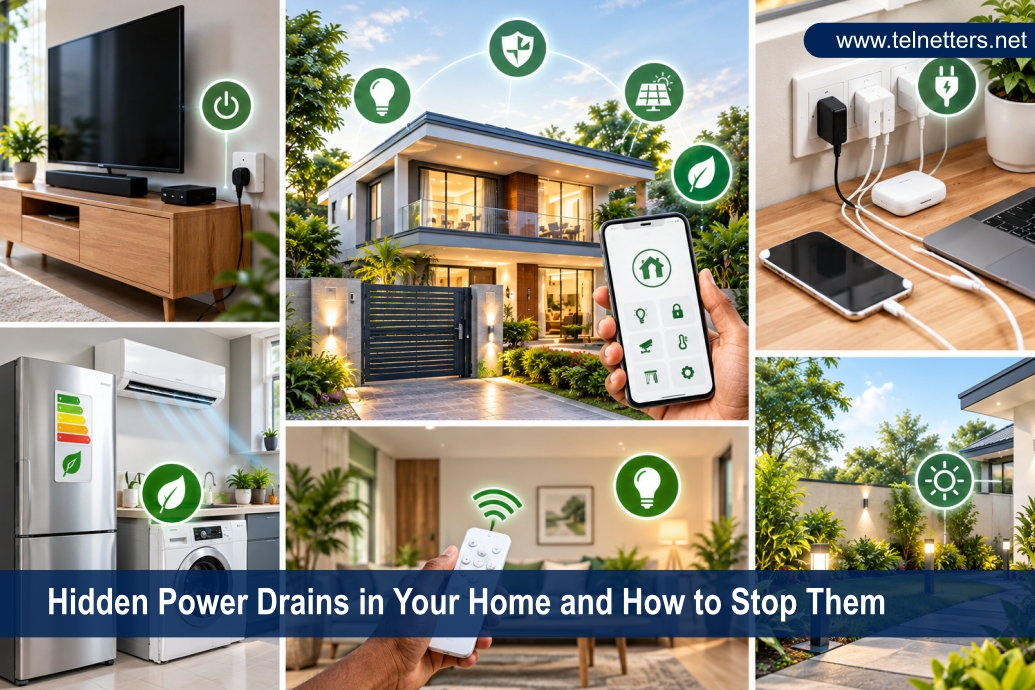
The Invisible Cost on Your Electricity Bill
Many homeowners are constantly looking for ways to reduce electricity consumption without sacrificing comfort and convenience. Yet, even when lights and major appliances are switched off, some devices may continue to consume electricity.
This is commonly referred to as standby power, phantom power, or vampire power. It occurs when electronic devices remain connected to a power source and continue drawing small amounts of electricity while they are switched off or in standby mode.
Individually, the energy consumption of these devices may seem insignificant. However, when several appliances remain connected for days, weeks, or months, the combined consumption can become noticeable.
The good news is that you don’t always have to change your lifestyle to reduce this waste. Smart home automation and energy management solutions can help you monitor, schedule, and automatically control many of the devices in your home.
Here are five common sources of hidden energy consumption and practical ways to manage them.
1. Electronics That Remain on Standby
Your television, decoder, sound system, gaming console, computer, printer, and other electronic devices may appear to be switched off while still consuming electricity in standby mode.
Many modern devices remain partially active so they can respond to remote controls, maintain network connections, receive updates, or resume operation quickly.
When several devices are left on standby every day, the cumulative energy consumption can add up.
The Smart Solution
A smart plug or smart socket can be used to control selected appliances automatically.
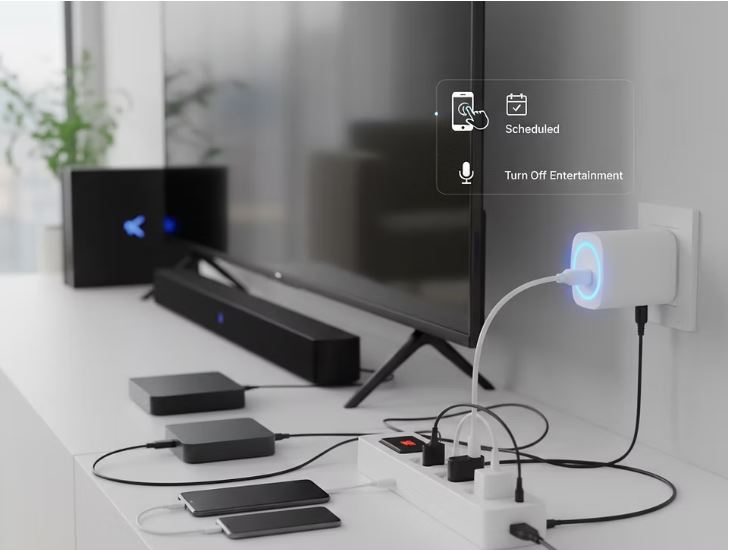
For example, entertainment devices can be scheduled to switch off completely at bedtime or when everyone leaves the house. Depending on the system, homeowners can also control connected appliances remotely using a smartphone or voice assistant.
Instead of remembering to unplug several devices every night, automation can handle the process automatically.
2. Chargers and Devices Left Plugged In
Phone chargers, laptop chargers, tablet chargers, rechargeable appliance chargers, and other power adapters are often left connected to electrical outlets even when they are not being used.
Although the power consumed by an individual charger may be relatively small, multiple chargers operating continuously can contribute to unnecessary energy consumption.
The same applies to some household appliances that remain connected to power throughout the day.
The Smart Solution
Smart sockets and automated power schedules can help control charging points and selected appliances.
For example, charging outlets can be switched off automatically during periods when they are not required or when the household is unoccupied.
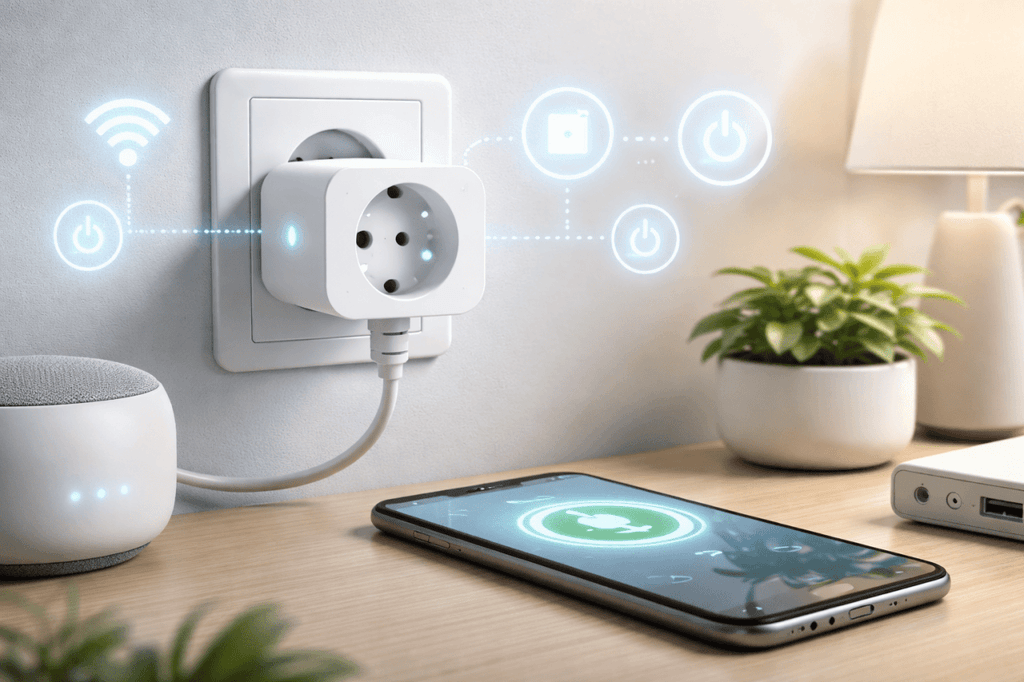
You can also create simple routines such as:
Bedtime → Switch off selected charging points
Leave Home → Switch off non-essential appliances
Morning → Restore power to selected devices
This reduces unnecessary consumption without requiring you to constantly remember which appliances should be switched off.
3. Old and Inefficient Appliances
Some appliances consume significantly more electricity than newer, energy-efficient models.
Older refrigerators, air conditioners, freezers, pumps, water heaters, and other equipment may require more energy to perform the same task as modern, efficient alternatives.
In particular, appliances that operate for many hours each day can have a substantial impact on your electricity consumption.
The Smart Solution
When replacing major appliances, consider energy-efficient models with appropriate efficiency ratings and technologies such as inverter compressors and variable-speed motors.
Smart automation can complement efficient appliances by allowing homeowners to schedule operation, control temperatures, monitor usage, and prevent unnecessary operation.
For example, an intelligent energy-management system can help ensure that selected appliances operate according to household routines rather than running unnecessarily.
4. Lights Left On in Empty Rooms
Lighting is one of the easiest areas where energy can be wasted.
A light left on in an empty bedroom, bathroom, corridor, office, store, or outdoor area may remain on for hours simply because nobody remembers to switch it off.
This becomes particularly common in larger homes and properties with multiple rooms.
The Smart Solution
Smart lighting, motion sensors, and presence sensors can make lighting more intelligent.
Lights can be programmed to switch on when someone enters a room and switch off automatically when the space is no longer occupied.
You can also create lighting schedules and scenes based on your daily routine.
For example:
Morning: Selected lights switch on automatically.
Daytime: Lights remain off where natural light is sufficient.
Evening: Selected areas illuminate automatically.
Night: Unnecessary lights switch off automatically.
This provides convenience while helping to reduce unnecessary energy consumption.
5. Outdoor and Security Lights Left On
Outdoor lights provide security, visibility, and an attractive appearance around homes, offices, estates, and commercial properties.
However, outdoor lighting can easily be left on throughout the day, particularly when switches are located inside the building or in difficult-to-access areas.
The Smart Solution
Outdoor lighting can be automated using timers, photocells, motion sensors, and smart control systems.
For example, security and garden lights can be programmed to operate according to the time of day or automatically respond to movement.
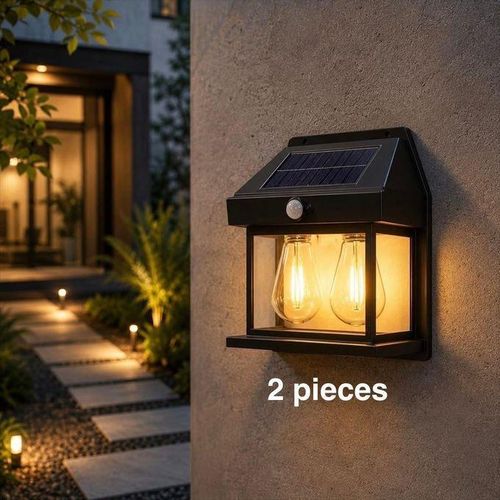
You can configure lighting so that:
At sunset: Outdoor lights switch on.
Late night: Selected decorative lights switch off.
When movement is detected: Security lights activate.
At sunrise: Outdoor lights switch off automatically.
This provides better control over outdoor lighting while avoiding unnecessary daytime operation.
The Smart Way Forward
Energy efficiency does not mean giving up comfort. It means using technology to ensure that your home consumes energy more intelligently.
With smart home automation, homeowners can control lighting, sockets, appliances, security systems, and other connected devices according to their routines and requirements.
When smart automation is combined with solar power, inverter systems, energy-efficient appliances, LED lighting, and proper electrical design, it can form part of a comprehensive approach to reducing unnecessary energy consumption.
Make Your Home Smarter with The Telnetters Technologies Ltd
At The Telnetters Technologies Ltd, we provide smart home and energy technology solutions designed to make modern homes safer, more convenient, connected, and efficient.
Our solutions include:
- Smart home automation
- Smart lighting and switches
- Smart sockets and appliance control
- CCTV and smart security systems
- Smart locks and access control
- Automatic gates and doors
- Home networking and Wi-Fi solutions
- Solar power and inverter systems
- Energy management solutions
Whether you are building a new home, upgrading an existing property, or developing a residential estate, our team can help you design and implement a technology solution suited to your needs.
Make Your Home Work Smarter
Contact The Telnetters Technologies Ltd today to discuss your smart home, security, or energy-management requirements.